How to Decrease Overwhelm
Beyond the To-Do List

Ever notice you're never overwhelmed by positive things? "Ugh, I'm too healthy. My relationships are going too well." Overwhelm stems from mental clutter, including overthinking, overcommitting, and under-recovering. Your brain constantly runs negative scenarios on limited bandwidth.
Cognitive bandwidth gets devoured by tiny decisions, social pressure, and way too many open browser tabs. It’s not one big crisis—it’s the friction of a thousand little ones.
In December 1973, three rookie astronauts aboard Skylab 4 made international headlines.
They went on strike. In space. On a $12 billion mission.
Gerald Carr, Edward Gibson, and William Pogue were rookie astronauts facing an impossible situation.

NASA had them working 16-hour days with 60-foot to-do lists, zero privacy, and non-stop micromanagement from ground control. One of them got space-sick and was publicly shamed in The New York Times. Then a gyroscope failed. It was relentless.
So one morning, they just… didn't show up to their briefing.
And it worked.
They had a brutally honest conversation with mission control. They laid out their mental state. NASA adjusted: cut the noise, gave them breathing room, and stopped the last-minute demands. The astronauts refocused on fewer, more meaningful tasks.
Morale skyrocketed. But more surprisingly, productivity soared too. The crew ended up outperforming the legendary "150 crew" they'd been compared to, taking 75,000 telescopic images of the Sun and capturing the first-ever recording of a solar flare from space.
We've all felt the pressure of being buried under to-do lists, wondering how others keep it together.
But overwhelm isn't about doing too much. It's about fuzzy priorities, shaky boundaries, and a nervous system in survival mode. The fix isn't always a new hack. It's rethinking how we're wired to function.
Your Brain: The Ultimate Accountant
Think of your brain as a meticulous accountant running a "body budget." Though it weighs only 2% of your body, it burns through 20% of your energy, constantly making decisions about where to allocate resources. Every moment, it's tracking your energy like dollars in a bank account.

You make withdrawals when you:
Skip meals
Multitask with 12 open tabs
People-please or pretend you’re fine when you’re not
Perfectionistically obsess over getting it “just right”
Re-live old trauma like it’s still happening
You make deposits when you:
Sleep like it’s medicine
Eat real food
Do slow, focused work
Re-create instead of escape
Too many withdrawals + too few deposits = emotional overdraft.
Symptoms: burnout, anxiety, irritability, shame, fatigue, mysterious body aches.
If you’ve ever been “hangry,” you’ve felt the mind-body budget in action.
Burnout Is Your Bank Statement
Stanford professor Baba Shiv demonstrated this energy depletion in a fascinating study. He divided students into two groups: one memorized a two-digit number, the other a seven-digit number. Then they walked down a hall and chose between chocolate cake or fruit salad.
Students remembering seven digits chose cake nearly twice as often. The extra numbers created a "cognitive load" that made it harder to resist temptation. When your mental resources are taxed, willpower becomes the first casualty.
Decision Fatigue
Every decision costs energy. Not just big ones like "Should I change careers?" but tiny ones: What socks? What lunch? Which brand of oat milk? This is decision fatigue, and it's compounded by the paradox of choice. Your brain gets tired from making too many choices, and tired brains default to easy, impulsive, or avoidant decisions.
The modern world drowns us in options, turning simple tasks into low-grade existential crises. Buying toothpaste, choosing a planner, picking a Netflix show. What should be straightforward becomes overwhelming. More options feel like freedom, but often create paralysis, anxiety, and regret instead.
The solution isn't to control everything. It's to automate the obvious and ritualize the repetitive. Smart people reduce their cognitive load because they understand their limits.
Automate:
Eat the same breakfast Monday–Friday
Schedule deep work at the same time every day
Grocery shop with a default list
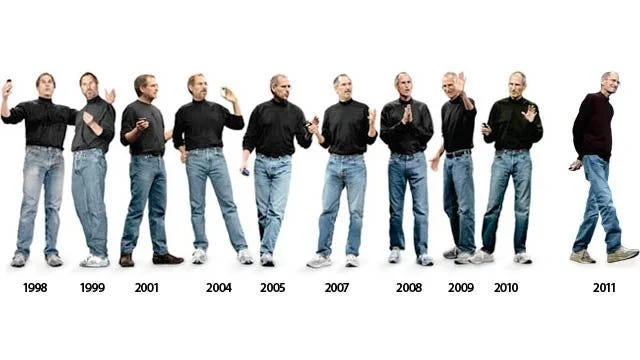
Wear your favorite outfit on repeat (i.e. Steve Jobs)
Make tiny decisions:
Break "Do taxes" into "email accountant"
Clarify the next action (just focus on one thing at a time)
Limit your inputs:
Fewer tabs
Curate your information diet
Stop doomscrolling like someone is paying you by the hour
Externalize and Declutter
Your brain is designed for processing, not storage. Yet most of us treat our minds like overstuffed filing cabinets, wondering why we can't think clearly.
Implementing a “brain dump” was a life changing habit for me.
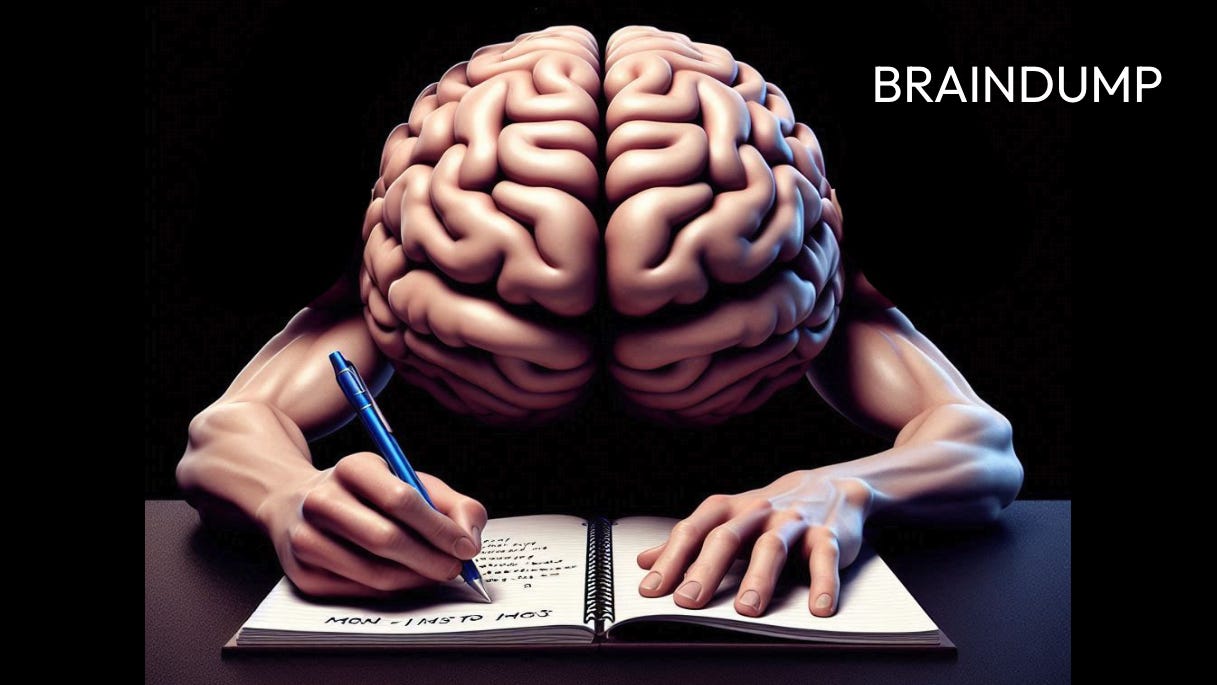
Get everything out of your head and into a trusted system. The brain will stop obsessing once it knows the info is safely stored
Have a place for everything to go (quotes, ideas, next actions, records, receipts, follow-up, etc)
One-ish inbox: combine your inbox, desktop, digital desktop, Slack, Teams, text, mailbox, and to-do list into as few as possible.
Use a "parking lot" for passing thoughts, which allows you to quickly return to what you’re working on
Only Handle It Once (OHIO) - Instead of putting a dish in the sink, put it in the dishwasher. Same with clothes.
Prune Regularly
Remove physical, digital, and relational clutter
Your calendar and commitments
Your inbox, files, and information you consume
Your expectations of yourself and others
Your wardrobe
3 To-do’s
A radical idea that has worked for me is to limit yourself to no more than three significant to-dos per day. Trying to do too much can burn you out and guarantee daily shame. If you do more, then great, but don’t force it. When everything is a priority, nothing is.

Boundaries
"The difference between successful people and really successful people is that really successful people say no to almost everything." - Warren Buffett
Stop over-functioning in other people's lives. "It's not my circus, not my monkeys” is a helpful mantra to remember. Over-functioning feels like you're trying to help, but its true motivation is control.
Perfectionism
Embrace "good enough" as a philosophy, not a compromise. Perfectionism isn't about high standards. It's fear of failure and criticism. The goal isn't to do everything perfectly because perfect doesn’t exist. Honestly, some things are worth doing poorly because done is better than perfect.
Sometimes the quest for the perfect system becomes another form of procrastination. “Good enough” systems that you actually use are better than the perfect systems that overwhelm you (I’m looking at you Notion).
Streamline:
Automate the obvious tasks
Delegate the draining activities
Identify and remove any friction or bottlenecks that make important things difficult to accomplish.
Energy and Focus:
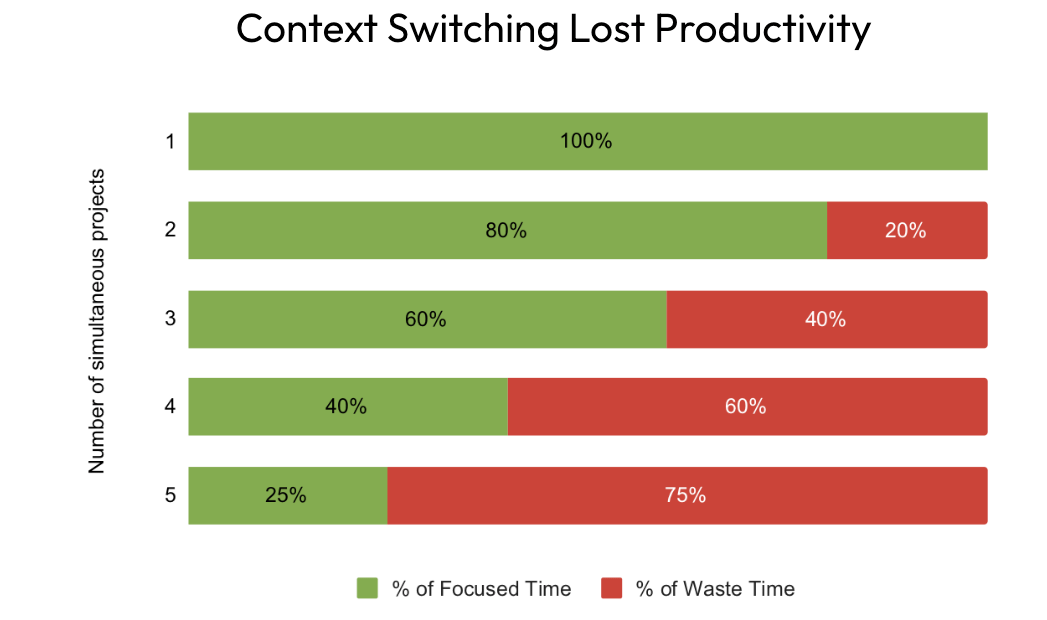
Research shows that multitasking can reduce productivity by up to 40%. Practice mono tasking instead. One thing at a time, done with slow and methodical attention.
Use Ultradian Rhythms (90–120 min cycles) to batch your energy
Don’t answer emails when your brain wants deep work
Don’t try to brainstorm when you’re in logistics mode
Do match your tasks to your focus levels, not the clock
Start With the Body
You can't control the mind with the mind. When you're spiraling, trying to think your way out is like trying to perform surgery on yourself - not helpful.
Your nervous system doesn't speak English. It speaks in sensations. It responds to breath, movement, and stillness faster than it responds to logic. These physical signals are how it understands safety.
If emotions are your brain's way of managing energy and signaling when something's out of balance, then better emotional regulation starts with your body's balance sheet: rest, eat, move, connect.
Try these:
Move your body (choose what you'll actually do, not what sounds impressive)
Use breath work (search YouTube for Wim Hof)
Relax your jaw and your shoulders
Step away for 5 minutes to reset
As Anne Lamott wisely said, "Almost everything will work again if you unplug it for a few minutes, including you."
Slow Down to Speed Up
Overwhelm is your body waving a white flag. By organizing your systems, setting clear boundaries, and taking care of your body, you can move from survival mode to thriving.
The Skylab astronauts discovered something profound: sometimes the best way to speed up is to slow down.